General
This course expired on 31 December 2025. If you have completed this course, you can print your certificate here.
This course has been replaced with our The Young Eye: Assessment of Vision, Part 1 - Birth to three years course, issued in January 2026.

Domains: Clinical practice, Communication
CPD Ref: C-104215
CPD Points: 
CPD Type: Non-interactive
Closing Date: 31 December 2025
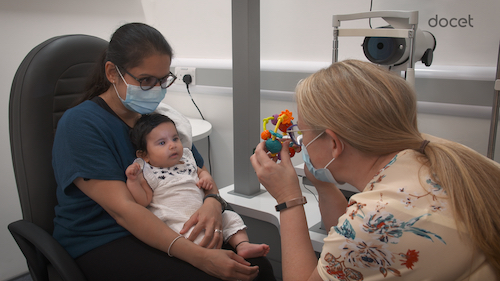
This three-part course explores the practical aspects of testing children’s vision, with a focus on examinations conducted in high street practice. It highlights the importance of taking a comprehensive history and selecting the most appropriate testing methods tailored to each child to accurately determine their visual status. Common challenges encountered during paediatric eye exams are addressed, along with strategies for adapting consultations when things do not go to plan.
The course features video footage of real paediatric vision assessments and interviews with the families involved. Two experienced optometrists share their insights and experiences working with infants and children, offering valuable tips on how to ensure successful and effective eye examinations.
Part one – Birth to 12 months
In the first part of this course, families share their experiences of bringing their infants for eye examinations. Two expert optometrists also discuss the importance of taking a detailed history and identifying symptoms, as well as the tests, tools and techniques that are most effective for assessing vision in this age group.
Part one includes:
- The importance of history and symptom-taking
- Assessment of infants up to 12 months of age
- Glossary for referencing.
Please note: Pop-ups located throughout Unit 2 give a brief description of the tests discussed; the glossary, found in the 'More information' section below, gives more detailed information about these tests and how to use them.
At the end of the course, you can complete the CPD quiz to gain one non-interactive CPD point.
To learn more about adapting t your approach when examining children as they move through toddlerhood and the pre-school years, please go to The Young Eye: Assessment of Vision, Part 2 – Twelve months to five years.
First published: November 2022