General
This course expired on 31 December 2025. If you have completed this course, you can print your certificate here.
This course has been replaced with our Glaucoma: Part 4 - Assessment of the intraocular pressure (IOP) course, reissued in February 2026.


Domains: Clinical practice, Professionalism
CPD Ref: C-101729
CPD Points:
CPD Type: Non-interactive
Closing Date: 31 December 2025
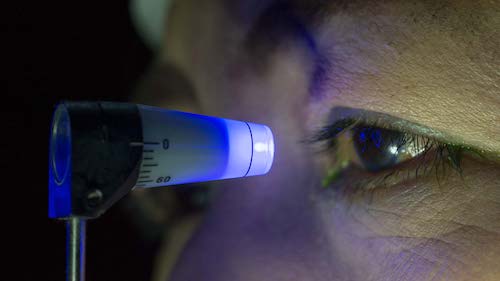
Glaucoma is the leading cause of irreversible blindness and affects 60 million people worldwide. This eight-part series will deal with all relevant key areas, including:
- Glaucoma definitions and classification
- Pathophysiology and risk factors
- Assessment of anterior segment and anterior chamber angle
- Assessment of the intraocular pressure
- Assessment of the optic disc
- Visual fields
- Management, referrals and care pathways
- Treatment.
Before you start the fourth part of the course please ensure that you have either completed Glaucoma: Part One – Definitions and Classification, Glaucoma: Part Two – Pathophysiology and Risk Factors and and Glaucoma: Part Three – Assessment of the anterior segment and anterior chamber angle or you are familiar with their content.
The fourth part covers glaucoma assessment (intraocular pressure).
Unit 6 – Intraocular pressureUnit 6 covers the measurement of IOP using contact and non-contact tonometers. Factors that influence the findings and accuracy of IOP measurements such as corneal thickness are explained. It looks at the normal range expected and when the findings may warrant referral or monitoring.
NICE NG81 and SIGN 144 guidance is discussed and their relevance to referral and management of glaucoma suspects.
At the end of the course you can complete the CPD quiz to gain 0.5 non-interactive CPD points.
To learn more about how to assess the optic disc to identify important signs of glaucoma, go to Glaucoma: Part Five – Assessment (Optic Disc).
First published: November 2019
Last reviewed: March 2022