Keyword search: 217 records shown
| Course categorySort by Course category Ascending | Course nameSort by Course name Ascending | Course summarySort by Course summary Ascending | New CourseSort by New Course Descending Descending |
|---|---|---|---|
| Audio – Ocular disease and management | Sound Optometry: Episode 29 - Hydroxychloroquine: Potentially toxic, potentially blinding |
Domains: Clinical practice, Professionalism
In this episode, Janice McCrudden talks to host Michelle Hanratty about the stark reality of hydroxychloroquine retinopathy when it is discovered too late. We hear about the patient and optometrist experience of a pilot monitoring scheme in Wales, before Michelle explores the toxicity effects of hydroxychloroquine with Consultant Ophthalmologist Rhianon Reynolds. Topics: Medical retina, Hydroxychloroquine toxicity, Retinopathy, Maculopathy, Referrals, Monitoring pathways, Autoimmune disease. | No |
| Audio – Ocular disease and management | Sound Optometry: Episode 30 - Glaucoma: ISNT it suspicious? |
Domains: Clinical practice, Communication
In this episode we first hear a patient case study; later, Patrick Gunn reflects on how his professional development and training has led to a specialist qualification in glaucoma. The second part of the podcast answers some of the questions asked by the glaucoma webinar attendees and delves into optic disc interpretation in detail. Presenter Michelle Hanratty and Patrick discuss the early signs to look out for in glaucomatous discs and how these relate to other findings such as OCT and visual fields. Topics: Glaucoma, Referrals, Intraocular pressure, Monitoring pathways, Optic disc, OCT, Visual fields. | No |
| Audio – Ocular disease and management | Sound Optometry: Episode 31 - Diabetic retinopathy screening and treatment |
No CPD Points Domains: Clinical practice
In this episode, we hear about England’s diabetic retinopathy screening programme, with a 'fly on the wall' recording of a screening appointment within the NHS. Dr Cathy Egan explains how AI systems work and reveals how the potential of AI will improve services to the public and increase research capability. We then hear from consultant ophthalmologist Sajjad Mahmood about current treatments for patients at risk of vision loss. Topics: Glaucoma, Referrals, Intraocular pressure, Monitoring pathways, Optic disc, OCT, Visual fields. | No |
| Audio – Clinical assessment | Sound Optometry: Episode 32 - Managing myopia: Now and for the future |
Domains: Clinical practice, Communication
In this episode, Michelle speaks with a highly myopic patient as well as a parent of highly myopic children about myopia’s impact on lifestyle and ocular health, and their hopes and fears for the future. We also hear from Kathryn Webber about recent myopia management research, advancements and guidance. Topics: Myopia management, High myopia, Risk factors for myopia, Communication, Pathological myopia, Young eye series. | No |
| Audio – Ocular disease and management | Sound Optometry: Episode 33 - Cataract surgery: Understanding risks and managing complications |
Domains: Clinical practice, Communication
In this episode, Michelle speaks with Dr David Lockington about how to get the balance right when explaining the risks and benefits of cataract surgery to patients. The consent process is explored in depth and David shares a surgeon’s insight into the risks that make a cataract surgery more complex, but not necessarily complicated. The second part of the podcast concentrates on postoperative complications and the importance of setting patient expectations prior to surgery. Topics: Cataract surgery, Consent, Cataract complications, Intraocular lenses, Patient care pathways, Communication. | No |
| Audio – Ocular disease and management | Sound Optometry: Episode 34 - YAG and SLT: Optometrist-delivered laser treatments |
Domains: Clinical practice, Communication
This episode provides a fly on the wall account of a typical YAG laser procedure. Michelle speaks with specialist optometrists Steven Burge and Don Williams, who reflect on their experiences of the training they underwent to be able to perform key ophthalmic laser techniques before moving on to discuss how they have honed their techniques with experience. Topics: Cataract postoperative complications, Posterior capsular opacification, Consent, YAG capsulotomy, Patient care pathways, Glaucoma, Ocular hypertension, Selective laser trabeculoplasty (SLT), Ophthalmic lasers, Glaucoma treatment, NICE. | No |
| CPD courses | Contact Lenses: Fitting Children, Part 2 - How to make the process a success (Non-interactive) |
CPD Ref: C-107674 CPD Points: CPD Type: Non-interactive Closing Date: 31 December 2026Domains: Clinical practice, Professionalism
In the second part of this two-part course, our experts discuss what you need to consider before fitting a child with contact lenses. They also give helpful advice on how to educate children and their parents about contact lenses and discuss the legal aspects to bear in mind when fitting contact lenses to younger patients. Topics: Contact lens compliance, Microbial keratitis, Communicating with children, Management of contact lens wear risks, Contact lens teach appointment, Legal considerations of fitting children with contact lenses, Young eye series. | No |
| Audio – Ocular disease and management | Sound Optometry: Episode 35 - AMD: Hope on the horizon |
Domains: Clinical practice, Communication
In this episode, Michelle meets with optometrist Bradley Warwick and one of his patients with geographic atrophy, and they discuss the benefit to patients that regular monitoring can provide. We also hear from consultant ophthalmologist Clare Bailey about the exciting developments in the therapeutic treatment of dry AMD. Topics: Age related macular degeneration, Geographic atrophy, Medical retina, Ocular coherent tomography (OCT), Fundus auto-fluorescence, Nutritional supplements, Patient communication, NICE. | No |
| CPD courses | Assessing children with special educational needs (January 2024 Webinar) |  CPD Ref: C-107759 CPD Points: CPD Type: Non-interactive Closing Date: 31 December 2026 Domains: Clinical practice, Communication
This recorded lecture aims to build the confidence of community optometrists when examining children with special educational needs (SEN). Professor Rachel Pilling provides guidance on adapting your communication and testing approaches to better accommodate children with special needs. Common ocular issues seen in SEN children are addressed, as are the ways in which optometrists can assist both the children and their parents in optimising vision. Recognising when referral is required is also explored. Topics: Special educational needs, SEN, ASD, ADHD, Cerebral visual impairment, CVI, Atypical visual behaviour, Communication, Retinoscopy, Visual assessment, Refraction, GOS, Dry eye, Referral, Young eye series. | No |
| CPD courses | Immunology: Introduction, Part 1 - Foundation (Non-interactive) |
CPD Ref: C-108048 CPD Points: CPD Type: Non-interactive Closing Date: 31 December 2026 Domains: Clinical practice, Specialty CPD (IP)
This is the first part of Docet’s introduction to immunology and the eye. Part one covers the basics of the immune system, building a foundation to enable optometrists to understand systemic and ocular immunity and what happens when things go wrong. This course will build current understanding for all optometrists and be useful as a core programme for IP optometrists or those planning to start their IP qualifications. Topics: Allergy, Immunology, Atopy, Pharmacological, Hypersensitivity, Innate, Autoimmune, Adaptive, Leucocytes, Infection, Immunology series. | No |
| Audio – Clinical assessment | Sound Optometry: Episode 36 - SEN: The path to lifelong eyecare |
Domains: Clinical practice, Communication
In this episode, we hear from the assistant headteacher and sensory impairment lead of a SEN primary school about the impact of visual dysfunction on SEN children. Michelle then speaks to Professor Rachel Pilling, delving into the potentially daunting task of carrying out an eye examination on children with SEN and providing valuable hints, tips and resources to better equip optometrists and lay the foundations to lifelong eyecare for SEN children. Topics: SEN, Special educational needs, Paediatric eyecare, Eye examinations, Cerebral Visual Impairment (CVI), Young eye series. | No |
| CPD courses | Immunology: Introduction, Part 2 - Ocular allergy and autoimmune disease (Non-interactive) |
CPD Ref: C-108280 CPD Points: CPD Type: Non-interactive Closing Date: 31 December 2026 Domains: Clinical practice, Specialty CPD (IP)
This is the second part of Docet’s introduction to immunology and the eye. Part two continues to set the foundation for optometrists in immunology and covers the basics of ocular immunology, allergy, and autoimmune disease. This course will build current understanding for all optometrists and be useful as a core programme for IP optometrists or those planning to start their IP qualifications. Topics: Allergy, Immunology, Atopy, Pharmacological, Hypersensitivity, Autoimmune, Infection, Cornea, Tears, Conjunctiva, Antibodies, Immunology series. | No |
| Audio – Ocular disease and management | Sound Optometry: Episode 37 - Immunology and allergy: A not so obvious link |
Domains: Clinical practice, Communication, Specialty CPD (IP)
In this episode, presenter Michelle Hanratty and Dr Peter Frampton discuss the ocular allergic responses commonly seen in optometric practice and explore their treatment using therapeutic agents. We also hear from a patient who suffered from interstitial keratitis, highlighting how the successful therapeutic management of this case is connected to the immunological response. Topics: Immunology, Allergic eye disease, Herpes zoster, Independent prescribing. | No |
| CPD courses | Immunology: Allergic Eye Disease, Part 1 - SAC and PAC (Non-interactive) |
CPD Ref: C-108643 CPD Points: CPD Type: Non-interactive Closing Date: 31 December 2026 Domains: Clinical practice, Communication, Specialty CPD (IP)
This is the first part of Docet's programme on immunology and allergic eye disease. Part one examines seasonal allergic conjunctivitis (SAC) and perennial allergic conjunctivitis (PAC). It covers the signs, symptoms, and differential diagnosis and offers expert opinions from optometrists and pharmacists on how to investigate and manage the conditions for both non-IP and IP optometrists in community practice. Topics: Hay fever, Rhinitis, Allergy, Anti-histamines, Immunology, Pharmacy, Allergens, Contact lenses, Mast cell stabilisers, Drugs, Atopy, Pharmacological, Referral, Seasonal, Perennial, Hypersensitivity, Red eye, Immunology series. | No |
| Audio – Professional matters | Sound Optometry: Episode 38 - Evidence-based practice: What, where, why? |
Domains: Communication, Professionalism
In this episode, presenter Michelle Hanratty is joined by Paramdeep Bilku, Clinical Advisor for the College of Optometrists, and IP optometrist Alan Hawrami in discussing the basic principles of evidence-based practice in optometry: What evidence is needed, where it can be found and why it is important. Topics: Evidence-based practice, Informed consent, Blue blocking lenses, Myopia management, Dry age related macular degeneration, Photo biomodulation treatment, Intense pulsed light treatment. | No |
| CPD courses | Immunology: Allergic Eye Disease, Part 2 - AAC, AKC and VKC (Non-interactive) |
CPD Ref: C-108946 CPD Points: CPD Type: Non-interactive Closing Date: 31 December 2026 Domains: Clinical practice, Communication, Specialty CPD (IP)
This is the second part of Docet's programme on immunology and allergic eye disease. Part two looks at acute allergic conjunctivitis (AAC), atopic keratoconjunctivitis (AKC) and vernal keratoconjunctivitis (VKC). It covers the signs, symptoms and differential diagnosis and offers expert opinions from optometrists and pharmacists on how to investigate and manage the conditions, for both non-IP and IP optometrists in community practice. Topics: Allergy, Anti-histamines, Immunology, Pharmacy, Allergens, Mast cell stabilisers, Drugs, Atopy, Pharmacological, Referral, Hypersensitivity, Red eye, Cornea, Spring catarrh, Immunology series. | No |
| CPD courses | Immunology: Allergic Eye Disease, Part 3 - CLAPC and CM (Interactive) |
CPD Ref: C-109068 CPD Points: CPD Type: Closing Date: 5 October 2026 Domains: Clinical practice, Communication, Specialty CPD (IP)
This is the third and final part of Docet's programme on immunology and allergic eye disease. Part three looks at contact lens-associated papillary conjunctivitis (CLAPC) and conjunctivitis medicamentosa (CM). It covers the signs, symptoms and differential diagnosis and offers expert opinions from optometrists and pharmacists on how to investigate and manage the conditions, for both non-IP and IP optometrists in community practice. Topics: Allergy, Anti-histamines, Immunology, Pharmacy, Allergens, Mast cell stabilisers, Drugs, Atopy, Pharmacological, Referral, Hypersensitivity, Red eye, Cornea, Contact lenses, Glaucoma, Preservatives, GPC, Immunology series. | No |
| CPD courses | Leadership is not hierarchical: Learning from OCCS complaints (April 2024 Webinar) |  CPD Ref: C-108782 CPD Points: CPD Type: Non-interactive Closing Date: 31 December 2026 Domains: Leadership & Accountability
In this recorded lecture, Richard Edwards, clinical consultant to the Optical Consumer Complaints Service (OCCS), reminds delegates of the leadership role they need to take in practice in order to be more accountable for safe clinical care. Based around three case studies, this session aims to equip optometrists with a greater understanding of the evolving regulatory landscape, enabling them to manage patient concerns and complaints effectively. Topics: Record keeping, GDPR, Consent, Professionalism. | No |
| Audio – Professional matters | Sound Optometry: Episode 39 - Complaints: Taking the lead |
No CPD Points Domains: Communication, Leadership & Accountability
In this episode, presenter Michelle interviews OCCS Complaints resolution manager Dawn Slocombe about the process of dealing with complaints. We also hear from Richard Edwards, Clinical advisor to the OCCS, about the aspects of modern practice that overlap with handling complaints, along with advice on how practitioners can effectively diffuse complaints with minimal consequences. Topics: Handling complaints, GOC Standards of Practice, Parental responsibility, Safeguarding, Consent, Leadership, Communication. | No |
| Audio – Clinical assessment | Sound Optometry: Episode 40 - Menopause: Effect and cause |
Domains: Communication, Clinical Practice
In this episode, presenter Michelle and consultant ophthalmic surgeon Julia Sen discuss typical menopausal changes and subsequent ocular changes, as well as the need to take a more holistic approach in treating menopausal patients. We then hear from Professor Stuti Misra about current research into changes to ocular health in relation to fluctuating or decreasing hormone levels. Topics: Menopause, Perimenopause, Hormone replacement therapy, Dry eye, Ocular surface disease, Meibomian Gland Dysfunction, Glaucoma, Cataract, Communication. | No |
| CPD courses | The Young Eye: Development of Vision, Part 2 - Three to 18 years (Non-interactive) |
CPD Ref: C-109302 CPD Points: CPD Type: Non-interactive Closing Date: 31 December 2026Domains: Clinical practice, Communication
The second of two programmes discussing the development of vision from birth to 18 years, part two focuses in detail at what visual changes occur from the age of three up to adulthood, looking at age-related visual norms and developmental milestones as Zara grows up. Topics: Emmetropisation, School vision screening, Myelination, Synaptic pruning, Development of amblyopia, Visual processing issues, Scholastic visual demands, Exotropia, Global motion, Biological motion, Contour integration, Development of colour vision, Visual conversion disorder, Young eye series. | No |
| Audio – Ocular disease and management | Sound Optometry: Episode 41 - Gene Therapy: Now and in the future |
Domains: Communication, Clinical Practice
Listening to this episode, where presenter Michelle speaks to Professor Omar Mahroo, a consultant ophthalmologist and Professor Rob Henderson, a consultant paediatric ophthalmologist, gives optometrists an update as to where the research and development of gene therapy currently stands, as well as an understanding of who might benefit from referral for diagnosis. Topics: Gene therapy, Inherited retinal disease, Communication, Clinical trials, Retinitis pigmentosa, Leber congenital amourosis. | No |
| IP case studies for peer review | IP Peer Review: Scenario 1 - Pseudophakic Cystoid Macula Oedema (CMO) |
In this session, delegates are asked to read and discuss the case scenario of a 74-year-old patient who attended a routine postoperative examination five weeks after left eye cataract surgery. Topics: Independent prescribing, Cataract, Referrals, Peer review, IP scenarios. | No |
| Audio – Ocular disease and management | Sound Optometry: Episode 42 - Presbyopia: Refractive surgery solutions |
Domains: Communication, Clinical Practice
In this episode, Michelle Hanratty explores refractive surgery options. She speaks to Professor Clare O’Donnell, Head of Eye Science at Optegra, about laser vision correction. She also discusses refractive lens exchange options with Amir Hamid, a cataract and refractive surgeon and looks at considerations after presbyopic surgery with specialist refractive optometrist Sundeep Vaswani. Topics: Presbyopia, Spherical aberration, Monovision, EDOF, Multifocals, Intraocular lenses, Phakic intraocular lenses, Visual environment analysis, Managing patient expectations, Communication, Cataract. | No |
| IP case studies for peer review | IP Peer Review: Scenario 2 - Conjunctivitis Medicamentosa (CM) |
In this session, delegates are asked to read and discuss the case scenario of a patient who attended for an urgent non-routine appointment with his optometrist as he was experiencing a left sore watery eye. Topics: Independent prescribing, Conjunctivitis Medicamentosa, Topical anti-inflammatory medicines, Referrals, Peer review, IP scenarios. | No |
| IP case studies for peer review | IP Peer Review: Scenario 3 – Post-operative rebound anterior uveitis |
In this session, delegates are asked to read and discuss the case scenario of a 67-year-old female who attended an emergency appointment at her community optometrist practice complaining of a painful, photophobic eye. Topics: Independent prescribing, Cataract, Steroidal anti-inflammatory medicines, Referrals, Peer review, IP scenarios. | No |
| IP case studies for peer review | IP Peer Review: Scenario 4 – Steroid-induced intraocular pressure rise |
In this session, delegates are asked to read and discuss the case scenario of a 70-year-old female who attended for a routine follow-up at a cataract post-operative clinic. Topics: Independent prescribing, Steroid related IOP rise, Topical anti-hypertensive therapy, Referrals, Peer review, IP scenarios. | No |
| Audio – Clinical assessment | Sound Optometry: Episode 43 - Vision Standards: Colour perception and more |
Domains: Communication, Clinical Practice
In this episode, Michelle Hanratty discusses the vision standards for safety-critical occupations with Professor John Barbur, who has developed a sophisticated colour vision test that is widely used to grade the severity of colour vision deficiency. We also hear from Ian Trimmer, who provides an insight into communicating bad news and why vision can be a particularly sensitive topic. Topics: Occupational vision standards, Driving and vision, Colour vision testing, Colour vision deficiency, Communication, Breaking bad news. | No |
| CPD courses | Common Corneal Conditions: What every optometrist needs to know! (October 2024 Webinar) | 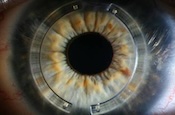 CPD Ref: C-110271 CPD Points: CPD Type: Non-interactive Closing Date: 31 December 2026 Domains: Clinical Practice, Communication
In this recorded lecture, Professor Sai Kolli, consultant ophthalmic surgeon, looks at corneal dystrophies that appear commonly in practice. He discusses which patients are appropriate for monitoring or management in the community, which need to be referred, and the impact of these conditions when referring patients for surgical treatment. Conditions such as keratoconus and Fuchs endothelial corneal dystrophy are also covered. Topics: Referrals, Keratoconus, Fuchs, Endothelium, Recurrent corneal erosion, Tomography, Topography, OCT, Astigmatism, Specular microscopy, Cross-linking, Graft. | No |
| Audio – Ocular disease and management | Sound Optometry: Episode 44 - Corneal Conditions: Shape and clarity |
Domains: Communication, Clinical Practice, Specialty CPD (IP)
In this episode, Professor Sai Kolli addresses some of the questions raised during his recent Docet webinar on common corneal conditions. He and Michelle explore different management options for some of these conditions, providing valuable insight into how we can deliver potential diagnoses with more sensitivity. We also hear from a patient who has recently been diagnosed with keratoconus, reminding us that communicating bad news is something that can be difficult to get right. Topics: Corneal dystrophy, Keratoconus, Fuch’s endothelial corneal dystrophy, Recurrent epithelial corneal erosion, Breaking bad news, Communication, Independent prescribing, Referrals. | No |
| CPD courses | Dementia and Optometry: Research and practice (November 2024 Webinar) |  CPD Ref: C-110444 CPD Points: CPD Type: Non-interactive Closing Date: 31 December 2026 Domains: Clinical Practice, Communication
In this recorded lecture, Dr Rakhee Shah presents the latest research on dementia and its implications for optometry. Mr Simon Raw provides clinical insights on tailoring eye examinations to meet the needs of patients with dementia, along with strategies to ensure they feel safe and comfortable. Topics: Mental Capacity Act 2005, Falls, Visual assessment and examination, Referral, Communication, History and symptoms, Dispensing, Dementia. | No |
| Expired | Safeguarding Adults for Optometrists Level 2 (Certificates achieved - 20/01/25 to 05/12/25) | This accredited Level 2 e-learning Safeguarding course expired on 5 December 2025. If you have completed this course, you can print your certificate here.This course has been replaced with our new updated Safeguarding Adults for Optometrists Level 2 course, issued in December 2025. | No |
| CPD courses | Safeguarding Children for Optometrists Level 2 (Early 2025) |
CPD Ref: C-110972 CPD Points: CPD Type: Non-interactive Closing Date: 12 October 2026 Domains: Leadership & Accountability, Professionalism | No |
| Audio – Clinical assessment | Sound Optometry: Episode 45 - Vision and Dementia: Modifying risk for better outcomes |
Domains: Communication, Clinical Practice
This podcast episode builds on the Docet webinar Dementia and Optometry: Research and Practice. Michelle speaks with Rakhee Shah and Simon Raw to address attendee questions and reinforce the key messages about the vital connection between vision and dementia. We also hear from Fadi Alfaqawi about how to assess the best course of action for a patient when advanced visual corrections are needed. Topics: Dementia, Alzheimer’s disease, Cataract, Vision loss, Visual impairment, Vision assessment, Domiciliary eyecare, Communication, Consent, Referrals. | No |
| Audio – Professional matters | Sound Optometry: Episode 46 - Burnout in Optometry: Causes, challenges and solutions |
Domains: Professionalism, Leadership & Accountability
In this episode, Michelle welcomes Neil Retallic, an optometrist and mental welfare researcher who explains why stress and burnout are so prevalent in our profession. We also hear from Dr Nicholas Taylor, consultant psychiatrist, about early interventions to prevent long-term mental health issues. Topics: Stress, Anxiety, Burnout, Wellbeing, Mental health, Compassion fatigue, Cognitive behavioural therapy. | No |
| Audio – Professional matters | Sound Optometry: Episode 47 - Chronic Stress: The brain-body connection |
Domains: Professionalism, Leadership & Accountability
This episode explores the systemic and neurological effects of chronic stress, highlighting its long-term impact on health. Experts discuss the body’s response to stress, its influence on brain function and behaviour, and strategies to protect mental well-being in healthcare professionals. Topics: Stress, Anxiety, Wellbeing, Mental health, Brain health, Cortisol, Hormones, Depression, Inflammation, Dementia. | No |
| CPD courses | PAC, PACS, and PACS+ in Focus: A guide for optometrists (March 2025 Webinar) |  CPD Ref: C-111770 CPD Points: CPD Type: Non-interactive Closing Date: 31 December 2026 Domains: Clinical Practice, Professionalism
In 2022, the Royal College of Ophthalmologists updated guidelines on angle closure disease. In this recorded webinar, Consultant Ophthalmic Surgeon Ms Nishani Amerasinghe provides an overview of PAC, PACS, and PACS+, covering risk assessment, symptom recognition, examination techniques, and appropriate patient management. Topics: Anterior chamber angle, Van Herick, OCT, Gonioscopy, Referral, Glaucoma: Part 1, Management, Treatment. | No |
| Audio – Ocular disease and management | Sound Optometry: Episode 48 - PACS: Management of primary angle closure suspects |
Domains: Clinical Practice, Communication
This episode is a follow-up to the Docet webinar PAC, PACS, and PACS+ in Focus. Michelle is joined by consultant ophthalmic surgeon Nishani Amerasinghe, and together they recap the essential takeaways for optometrists, including key insights into primary angle closure disease and potential treatment options, as well as long-term patient management within community practice. Topics: Primary Angle Closure (PAC), Anterior angle assessment, Glaucoma, Risk factors for PAC, Referrals, Communication, Management in primary care. | No |
| CPD courses | The Young Eye: Development of Vision, Part 1 - Birth to three years (Non-interactive) (Updated 2025) |
CPD Ref: C-112087 CPD Points: CPD Type: Non-interactive Closing Date: 31 December 2026 Domains: Clinical practice, Communication
The first of two programmes discussing the development of vision from birth to 18 years, part one looks in detail at age-related visual norms and what changes occur from birth to age three, highlighting what early abnormalities can impair visual ability. Topics: Anatomical changes to the visual system, Development of VA, Contrast perception, Colour perceptions, Accommodative systems, Binocular systems, Ocular and neurodevelopmental abnormalities arising from forceps delivery or prematurity, Synaptogenesis, Emmetropisation, Infantile esotropia, Retinoblastoma, Physical development milestones, Young eye series. | No |
| Audio – Professional matters | Sound Optometry: Episode 49 - Enhanced Optometric Services: Here, there and nearly everywhere |
Domains: Professionalism
Since COVID-19, enhanced optometric services have expanded across the UK, with Integrated Care Boards now commissioning a wider range of care, including paediatric and glaucoma services. In this episode, Michelle speaks with Dharmesh Patel and Hayley Moore about the evolution of community optometry and shares tips for optometrists looking to upskill and get involved. Topics: Enhanced Optometric Services, Referral refinement, Glaucoma, Paediatric eyecare, CUES, MECS. | No |
 No CPD Points

 No CPD Points


 No CPD Points

 No CPD Points

 No CPD Points




 No CPD Points





 No CPD Points



 No CPD Points





 No CPD Points












 No CPD Points



 No CPD Points


 No CPD Points






 No CPD Points


 No CPD Points






 No CPD Points

 No CPD Points
 No CPD Points


 No CPD Points




 No CPD Points